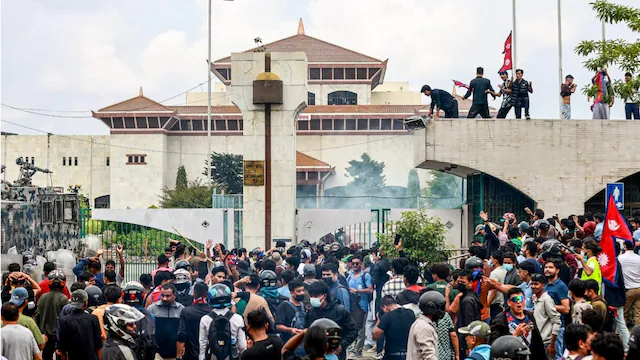

Nepal Unrest is being called a “Gen Z movement” in some media. Let me be very clear — it is not. This was not some spontaneous youth uprising. It was planned, down to the last detail. Streets, messages, timing, targets — everything was coordinated to make the maximum impact.
And here’s the bigger point: this is not just Nepal’s problem. India needs to pay attention. There are always people watching, waiting for any chance to stir trouble here. Nepal should serve as a wake-up call for all of us.
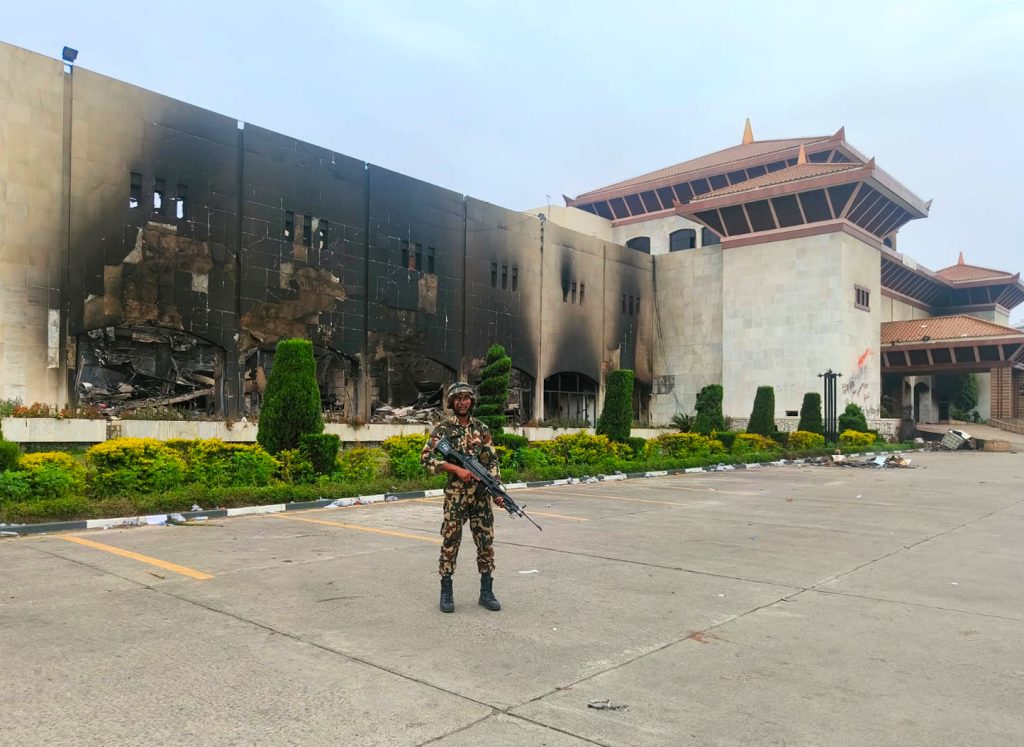
Nepal Unrest : A Lesson, Not a Trend
People are calling the Nepal Unrest a “Gen Z movement” but that’s not the full story. Honestly, it was planned and coordinated. It didn’t just happen on the streets by chance. Routes were mapped out beforehand. Protest timings and messages were synced on social media. Some groups even targeted government buildings and politicians’ homes deliberately to get maximum attention.
And it wasn’t just on the streets. Online campaigns shaped the story, spread selective information, and made things look much bigger than they really were. It was all organized.
Even in India, some opposition voices have suggested that something like this could happen here. To them, I say: don’t self-expose. Every move to create unrest is being watched, and authorities are on top of it. This isn’t a threat — it’s a reality check.
The lesson is clear: chaos doesn’t happen by accident. It takes planning, coordination, and manipulation. Nepal shows how quickly unrest can spiral if everything is lined up perfectly. India must learn from this and stay alert, because the moment people think they can repeat it here, they’ll find out we’re ready.
Anti-National Agendas and Nepal Unrest
To those spreading hatred on social media and openly wishing chaos in India: your anti-national agenda is visible and being closely monitored. This isn’t new. Many people have been working toward this for a long time, spreading misinformation, glorifying unrest, and attempting to provoke instability. The venom being shared online on Twitter and other platforms is aimed at shaking India’s foundations. These actors pose a major threat to India’s stability.
It’s not just ordinary users. Prominent personalities, scholars, and even some opposition voices have been active on platforms like Twitter, openly hinting or warning that unrest like Nepal’s could happen here. Let me be clear — this isn’t genuine concern. History shows that some of these warnings are really intentions. They are fueling narratives, sharing selective stories, and stirring emotions to see unrest unfold.
Government is efficient in countering such activities, every attempt to create disorder is being tracked. It is important to understand that the Indian state has systems, institutions, and vigilance mechanisms that prevent the replication of such chaos.
Anti-national agendas are active, visible, and dangerous. Opposition voices, self-proclaimed scholars, and influential personalities have played their part in spreading venom, but they are being watched, and India’s stability will not be compromised.
India Remains Different
Why could this happen in Nepal but not here? India is huge and incredibly diverse nation. We have strong institutions, functioning democratic processes, and authorities who are alert. People here are generally aware and can spot false information — something Nepal’s population struggled with during their political chaos.
That doesn’t mean we can sit back. There are groups out there trying to create trouble, twist stories, and provoke unrest. Even a small, organized group can make things look bigger than they are. Remember the CAA protests or the Farmers’ protests? Small groups of people, with social media and money, created the illusion of nationwide anger.
It’s also important to remember that unrest isn’t always about numbers on the streets. Even a small, organized group with access to social media, funding, and public visibility can amplify events far beyond their actual size or significance. That’s what happened during the CAA protests and Farmers’ protests, where narratives were carefully manipulated to create a sense of national-scale anger.
India’s diversity is our strength, but it can also be twisted online. A small event can appear like a national crisis if left unchecked. Nepal shows us how fast things can spread when planning meets chaos. India must stay vigilant — authorities, institutions, and citizens all have to play their part to make sure foreign-style unrest never takes root here.
Lessons from Past Protests
Look at the CAA protests and the Farmers’ protests — they were not spontaneous. Political parties were heavily involved in spreading misinformation, often putting aside their national duty, and the public paid the price. Everyone knows how narratives were carefully shaped to exaggerate participation and keep momentum going for months.
Take the CAA and NRC protests. Did the NRC ever actually say it was meant to remove the Muslim community ? No. Not at all. The entire protest was built on false information and misleading narratives. Even small children from the community were seen on the streets, accusing the government of things they had no role in. Indian Muslims had nothing to do with CAA or NRC, yet anti-national elements actively fueled anger. Some Bollywood actors and actresses jumped in as well, acting as if they were the most educated people in the country, judging the constitutionality of every law passed by Parliament. They appeared on stages like Azad Maidan, making statements that misled people and amplified unrest.
Here’s a question that hardly anyone asks: why should the government be expected to automatically grant citizenship to the majority community from neighboring countries under CAA? The answer is simple — there is no real threat to this community in their own countries. They aren’t under persecution or danger that justifies special treatment. If they truly wish to become Indian citizens, they must follow the general legal process that applies to everyone. This isn’t discrimination; it’s fairness, consistency, and respect for the law.
Now, look at the Farmers’ protest. The only farmers are in Punjab and Haryana; the rest of the states don’t have farmers at all — they don’t produce anything. Yet, both online and offline, it was magically turned into a “nationwide movement.” This is a perfect example of how meticulously these protests were executed, and everyone knows who fueled them.
Just like the CAA and NRC protests, there were also foreign elements involved in funding these movements. One of the consequences was the blocking of transport and access for the public. When protesters take such actions, they automatically lose the respect that citizens usually carry for farmers. Nobody gave them the authority to hinder public movement and then claim they were “upholding the Constitution.”
It’s almost laughable how Canadian politicians, including then-PM Justin Trudeau, openly said Canada would always defend the rights of “peaceful protesters.” The reality? Canada has often been a hub for Khalistani elements who directly threaten India’s integrity. Even the so-called climate activist Greta Thunberg shared a “toolkit” document that outlined ways to support the protests. This led to an FIR by Delhi Police against the creators of the document — not against Greta — showing how external interference was trying to manipulate the situation.
A key point often misunderstood is about MSP — Minimum Support Price. Some protesters acted as if MSP was a legal guarantee, but it isn’t. MSP is a policy decision, announced before the sowing season based on recommendations from the Commission for Agricultural Costs and Prices (CACP). It considers previous production, possible future production, domestic and international demand and supply, crop prices, terms of trade, inflation, and consumer impact. Farmers cannot legally force the government or private traders to buy produce at MSP. While the government procures certain crops, mainly wheat and rice through the Food Corporation of India (FCI), this is not unlimited.
Yet opposition parties pushed for a law that would make it a criminal offense for anyone — government or private trader — to buy produce below the announced MSP. This is unconstitutional, violates free trade, and harms the economy. And now, the same parties are claiming they are the protectors of the Constitution, even though they actively fueled misinformation and unrest for political gain.
These examples — CAA/NRC and Farmers’ protests — show a pattern. Organized groups, political parties, and certain public figures can take legitimate grievances, twist narratives, and create movements that appear larger and more spontaneous than they actually are. Nepal’s unrest is no different: it was planned, orchestrated, and executed, and India must learn the lessons before similar attempts can gain traction here.
The Need for Constant Vigilance
The unrest in Nepal should serve as a clear wake-up call for India. There are always “vultures” circling, waiting for the slightest opportunity to ignite chaos here. These actors are looking for any spark they can exploit — misinformation, unrest, or divisions within society. The government must remain extremely vigilant and proactive, taking every necessary step to ensure the country’s stability is never compromised.
Following a meeting between the Prime Minister and the Cabinet Committee on Security (CCS) on 09/09/2025, authorities have increased vigilance along the Indo-Nepal border to prevent illegal infiltration and manage migration. This is not just a routine measure — it is a necessary step to ensure that external influences cannot worsen internal unrest. Every agency, from border security to intelligence, is on high alert, coordinating to detect and neutralize potential threats before they take root. Citizens, too, must remain aware and cautious, understanding that even small attempts at disruption are being closely monitored.
India’s strength lies not just in its institutions, but also in its alert citizens. The Nepal example is a reminder that constant vigilance is the only way to ensure chaos never finds a foothold in our country.
Conclusion
The Nepal Unrest demonstrates the importance of vigilance for India. India is strong, and its institutions are resilient. But that does not mean we can ignore attempts to incite chaos. Anti-national actors are active, organized, and persistent. The Nepal example demonstrates how unrest can be meticulously planned and executed. India must learn from this, remain vigilant, and ensure that any attempt to destabilize the nation is identified, countered, and neutralized.
Let this be a reminder: our stability is non-negotiable, and attempts to replicate foreign unrest within India will fail if we remain alert, united, and proactive.
External Links


