
Table of Contents
Vande Mataram
For 150 years, they’ve carried the heartbeat of India. As the country marks this historic moment in 2025, we aren’t just celebrating a song — we’re celebrating what it stands for: unity, courage, and an endless love for the motherland.
How It All Began
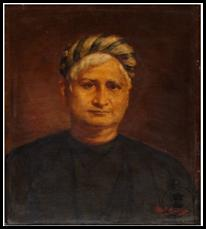
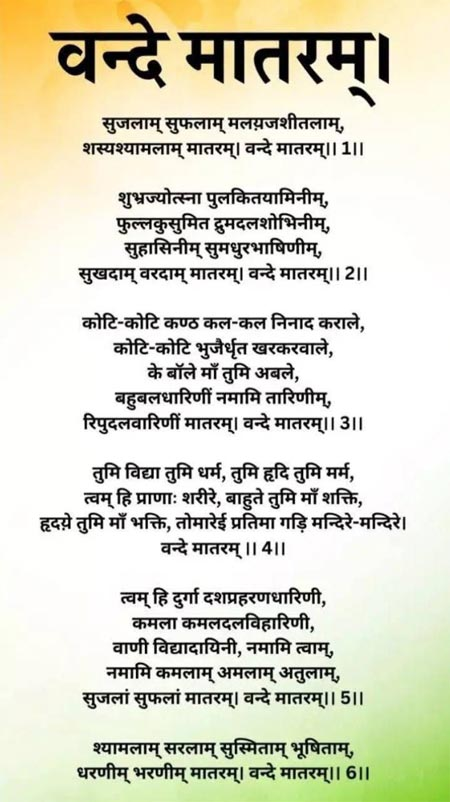
The story goes back to 7 November 1875, when Bankim Chandra Chattopadhyay wrote Vande Mataram during Akshaya Navami. Later, he included it in his novel Anandamath. What began as a hymn to the motherland slowly turned into something much bigger — a source of pride and emotional strength.
Those few lines, “Mother, I bow to thee,” still sound as moving today as they must have in his time.
A Tribute to Maa Bharati
This 150-year celebration is also a tribute to Maa Bharati — our sacred Mother India. Every word in Vande Mataram is like a soft bow to her: to the soil beneath our feet, to the rivers that flow through her, and to the spirit that ties all of us together.
True patriotism isn’t just waving the flag once a year — it’s the quiet gratitude we feel every day for the land that raised us. In that sense, Vande Mataram is less of a song and more of a thank-you.
The Song That Shook an Empire
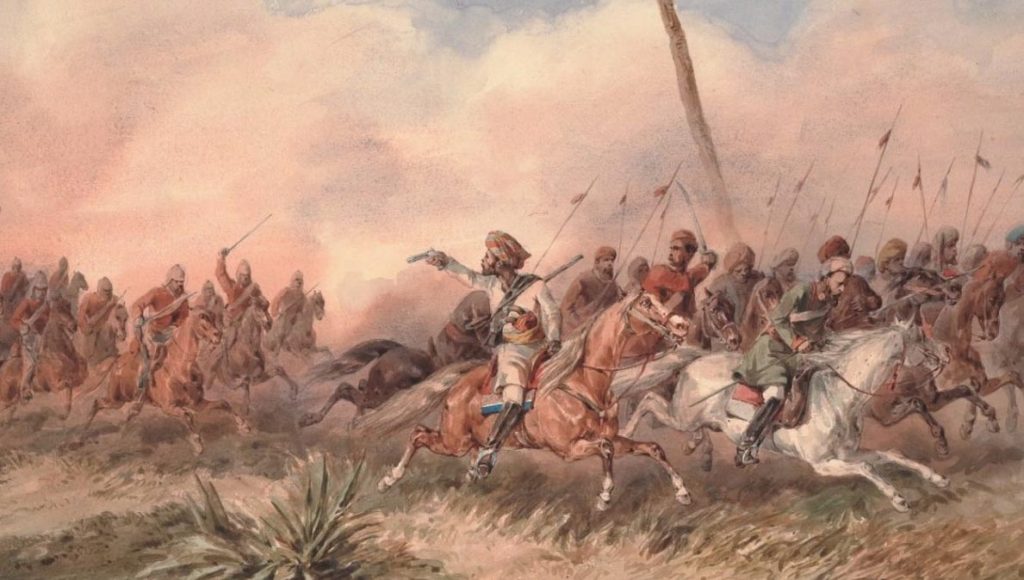
During the freedom struggle, this hymn turned into a thunderous voice of resistance. Freedom fighters, students, and reformers all drew courage from it.
When Rabindranath Tagore sang it at the 1896 Congress session in Kolkata, people felt something shift. The British banned its public singing because they feared its strength — but by then, it had already become part of every Indian’s soul.
It wasn’t just a protest song; it was faith in musical form.
Impact on Indian Revolutionaries Abroad
The spirit of Vande Mataram was not confined to India’s borders — it echoed wherever Indians fought for freedom.
In 1907, Madam Bhikaji Cama unfurled the first tricolour flag in Stuttgart, Germany, with Vande Mataram proudly inscribed on it. Two years later, Madan Lal Dhingra, before facing the gallows in England, uttered his final words — “Bande Mataram.”
Around the same time, Indian patriots in Paris launched a revolutionary journal titled Bande Mataram from Geneva, spreading India’s message of independence across Europe. Even in Cape Town, when Gopal Krishna Gokhale arrived in 1912, the crowd greeted him with chants of Vande Mataram — proving that the song had become the heartbeat of Indians everywhere.
Recognition and Renewal
After Independence, Vande Mataram was given its rightful place as India’s National Song, alongside Jana Gana Mana as the Anthem.
The Constituent Assembly described it as a living symbol of sacrifice and spiritual devotion — something every Indian could connect with.
Now, 150 years later, the Government of India has planned a year-long celebration (2025–2026) to rekindle that spirit.
According to PIB and amritkaal.nic.in, the programme will include mass singing, a commemorative coin and stamp, exhibitions, and youth campaigns — all aimed at keeping the revolutionary spirit alive.
Why It Still Matters
Even today, Vande Mataram hits differently. It reminds us that patriotism isn’t about slogans or social media posts — it’s about love, respect, and everyday contribution.
It’s the reminder that our modern, fast-paced India still carries the same pulse that once united our ancestors under one song.
When we sing it now, we’re not looking back with nostalgia — we’re looking forward with purpose.
Closing Thoughts
As India celebrates 150 years of this immortal hymn, let’s pause and remember what it really means — respect, resilience, and reverence.
Vande Mataram once sparked a revolution. Today, it asks us to protect its legacy and pass it on with pride.
Vande Mataram, Vande Bharatam!
वंदे मातरम, वंदे भारतम !
External Links / Source
https://amritkaal.nic.in/vande-mataram
https://www.pib.gov.in/PressReleasePage.aspx?PRID=2186984
https://knowindia.india.gov.in/national-identity-elements/national-song.php


